
Published: May 2026
Category: Organizing
Est. reading time: 5 minutes
Clutter whispers. It pulls at the edges of your attention, reminding you of unfinished tasks and decisions left unmade. A single cluttered counter might not seem like much, but your brain notices. It has to work harder to filter out the noise before it can focus on what truly matters. Over time, this quiet drain can leave you feeling more tired, more scattered, and less at ease in your own home. The good news is that small, gentle changes can make a remarkable difference. Without a weekend-long purge or a stark, empty house, how to be happier with less becomes a kind, slow exploration of what truly lightens your daily life.
Living with less is not about deprivation. New research from the University of Otago found that those who embrace voluntary simplicity report greater happiness, not because they own fewer things, but benefits of owning less saves up time and resources to connect with others, live in line with their values, and participate in their communities. In fact, a 2025 study confirmed that minimalism offers the dual benefit of a lower ecological footprint and greater wellbeing. The secret is not in the number of items you own, but in how your space makes you feel.
This is where low-stakes, playful experiments come in. Think of this not as a chore, but as a quiet investigation into what brings you peace. Here are three gentle experiments to welcome a lighter home.
Experiment 1: The ten‑minute treasure hunt
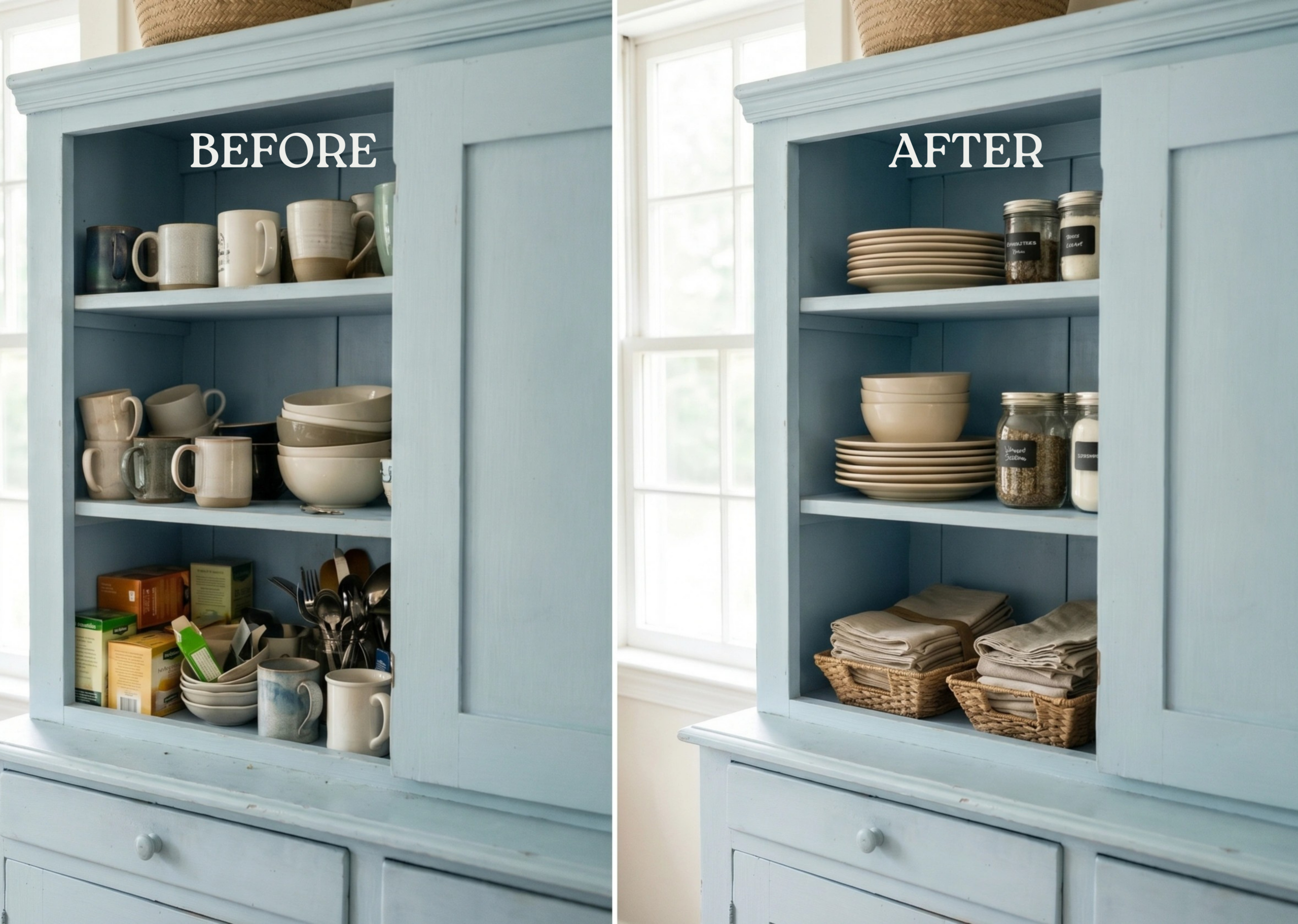
When the thought of how to declutter your home or even an entire room feels paralysing, it is time to shrink the goal. Spending just ten minutes decluttering one small spot can decrease anxiety levels by creating a more organised environment and providing a sense of accomplishment. This is the ten-minute method, and it works because it bypasses your brain’s overwhelm response.
Here is how you play. Set a timer for exactly ten minutes. Choose one tiny area: a single drawer, a bathroom shelf, a kitchen counter, or even just the top of your nightstand. Work only until the timer beeps. When you finish, you stop. No pressure to continue, no guilt if you did not “finish” the whole room.
Why it rewires your calm. When you declutter, your brain releases small amounts of dopamine, the feel-good chemical, while lowering cortisol, your body’s stress hormone. Even a quick tidy can make your space feel less distracting and more controllable. Over time, these tiny wins build momentum. One cleared drawer becomes two. A calm counter encourages you to clear the next one. But even if you never move beyond ten minutes a day, that single daily act is still a gift to your nervous system.
Experiment 2: The capsule corner
You have probably heard of a capsule wardrobe: a small collection of clothes you truly love and wear. A capsule home applies the same gentle principle to any room in your house. Instead of filling shelves with things you might use someday, you trim down to only what you need and truly love, creating a space that is welcoming, warm, and functional.

Here is how you play. Choose one small area to capsule-fy. A coffee table, a bookshelf, or a bathroom counter works beautifully. Remove everything from that surface. Now, place back only the items you use at least once a week and that genuinely bring you comfort or joy. Everything else finds a new home elsewhere or is set aside to donate. The goal is not emptiness, but intention. A capsule corner should feel like you, just a quieter version.
Why it rewires your calm. Clutter competes for your brain’s attention. The more objects you see, the harder your brain works to process them all. A capsule corner creates visual calm, giving your mind space to rest. Without the constant visual noise, you may notice that you feel less distracted, more present, and strangely more yourself. One reader described her capsule nightstand as “the first peaceful breath of the evening.”
Experiment 3: The one‑week pause
Many of us buy things out of habit, not genuine need. A quick scroll, a flash sale, a momentary desire. This experiment asks you to simply pause. A no‑spend week is a gentle challenge that helps you learn about your financial habits and discover how much you already have. It is less about restriction and more about mindful noticing.
Here is how you play. For seven consecutive days, commit to buying nothing non-essential. Essentials like food, medication, and household necessities are fine. But new clothes, home decor, gadgets, and impulse treats wait until the week is over. Keep a small notebook nearby. Each time you feel the urge to buy something, write it down. At the end of the week, review your list. Ask yourself: do I still want these things? Or was the urge simply a passing moment?
Why it rewires your calm. This pause interrupts the automatic consumption loop. When you stop bringing new items in, you naturally start appreciating what you already own. You may discover forgotten treasures, rediscover an old favourite jumper, or realise you never actually needed that scented candle. The pause also saves money and reduces the inflow of clutter before it even arrives. Many who try this experiment find that one week stretches into two, then a month, then a new way of seeing.
What to do with things, that leave your home?
As you clear drawers, capsule corners, and pause new purchases, you will inevitably have items ready to leave your home. Letting go can feel surprisingly emotional. That old vase from your aunt, the book you never finished, the kitchen gadget that seemed brilliant but never got used. Here is how to release them kindly.

For donations. Gather clean, usable items and drop them at a local charity shop. Knowing that your things might find a second life with someone who genuinely needs them turns decluttering into a compassionate act. Studies suggest that donating boosts positive emotions and reduces stress, adding another layer of healing to the process.
For sentimental items. Take a photograph first. Research shows that simply snapping a photo of an object makes it significantly easier to let go of. The memory is preserved, even if the physical item moves on.
For recycling or disposal. Be honest about broken or worn items. Not everything needs to be donated. Give yourself permission to responsibly discard things that have truly served their purpose. Your home is not a museum of guilt.
A quiet invitation
Start with just one experiment. Not all three of them at once. It does not have to be perfect. Just one. The ten-minute treasure hunt is the easiest entry point: clear a single drawer tomorrow morning and notice how your shoulders feel afterwards. Perhaps a little lighter, a little more spacious.
You do not need a minimalist home to feel the benefits. You simply need a home that supports the life you are living right now, not the life you might live someday or the life someone else expects. How to be happier with less is not about the number of things you own. It is about the quality of your attention, the peace in your breath, and the quiet sense that your space finally has room for you.
Save this post for a day when your home feels a little too full. 📌
Which experiment will you try first? I would love to hear how a single drawer or a pause on spending shifts something small inside you. Share in the comments below or tag me on Instagram https://www.instagram.com/sophiasquietcottage/?hl=en.
👇 Would you like a free printable decluttering checklist to guide your gentle experiments? Sign up below, and I will send one straight to your inbox.
Your home is not a museum of guilt or a storage unit for someday. It is your sanctuary. These three experiments are simply invitations to come home to yourself, one small, joyful step at a time. I would be honoured to hear how they land for you. 💛


