
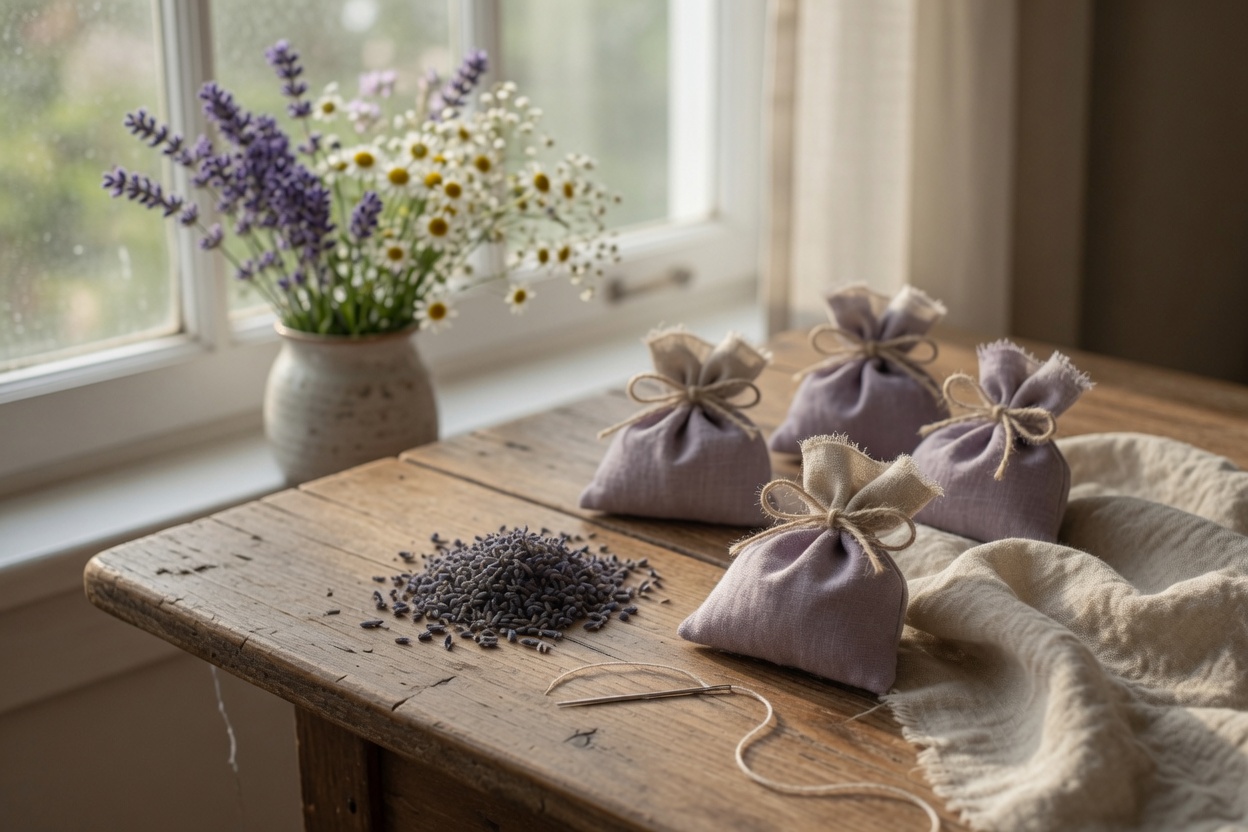
Imagine opening a drawer and being greeted by the soft, honeyed scent of lavender. It is not a sharp, synthetic fragrance. It is earthy, floral, and deeply calming – the kind of scent that seems to slow time down.
Lavender sachets are one of the simplest and most rewarding crafts you can make for your home. They require almost no special skills, use minimal materials, and reward you with months of natural fragrance. Tucked into drawers, placed under pillows, or hung in wardrobes, these little pouches carry the essence of summer into every corner of your home.
This simple guide will walk you through making your own lavender sachets, share the many ways to use them, and introduce you to other herbs that work beautifully alongside or instead of lavender.
Why lavender sachets are worth making
Lavender has been treasured for centuries, not just for its beautiful scent but for its remarkable properties. The dried buds of the lavender plant contain natural oils that are known for their calming and soothing effects. Placing a lavender sachet near your pillow can promote relaxation and enhance sleep. The gentle aroma has been used for insomnia, anxiety, and depression, and it is known to lift the mood.
Beyond their calming benefits, lavender sachets are also practical. They keep linen closets, wardrobes, and drawers smelling fresh and pleasant. They are naturally effective at deterring moths and other insects, making them a wonderful alternative to chemical mothballs. A few sachets tucked into a suitcase when travelling can even help reduce the risk of bringing home unwanted guests.
Making your own lavender sachets also allows you to avoid the synthetic fragrances and plastic packaging that come with store-bought options. You control exactly what goes into your sachets, and you can reuse fabric scraps or old linens for a truly sustainable craft.
If you enjoyed learning about natural, handmade alternatives for your home, you might also like our guide on making your own dried herb bundles from the June garden HERE.
What you will need
Gathering your supplies is half the fun. Most of these items are probably already in your home.
For the filling you need:
- Dried lavender buds (freshly dried from your garden or purchased)
- Uncooked rice or fine sand (optional – adds weight and helps the scent last longer)
- A few drops of lavender essential oil (optional – refreshes the scent over time)
To make the sachet bag:
- Small fabric squares (about 10cm x 10cm or 4×4 inches) – cotton, linen, or muslin work beautifully
- Needle and thread, or a sewing machine
- Scissors (pinking shears are lovely for preventing fraying)
- Ribbon, twine, or cord for tying
A no-sew version:
- Small muslin bags or drawstring pouches (available at craft stores or online)
- Alternatively, leftover fabric tied up with ribbon works just as well
How to make your lavender sachets
There are two main approaches: sewn sachets for a more finished look, and no-sew sachets for an even simpler project. Both are equally effective.
The sewn sachet method
This method creates a beautiful, reusable sachet that can be refreshed and reused for years.
Step one: prepare your fabric. Cut two squares of fabric, each about 10 cm x 10 cm (4×4 inches). If you are using pinking shears, cut along the edges to prevent fraying.
Step two: sew the sides. Place the two squares together with the pattern facing inward (right sides together). Sew along three sides, leaving one side open for filling. Use a small seam allowance of about 0.5cm (¼ inch).
Step three: turn and press. Turn the sachet right side out through the open end. Gently press the edges with an iron for a neat finish.
Step four: prepare the filling. In a small bowl, mix your dried lavender buds with a scoop of rice. The rice adds weight to the sachet and helps the scent last longer. If you want a more intense fragrance, add a few drops of lavender essential oil to the mixture.
Step five: fill the sachet. Using a small funnel or a rolled piece of paper, gently fill the sachet with your lavender and rice mixture. Do not overfill – leave a little room so the sachet remains soft and pliable.
Step six: close the sachet. Fold the open edges inward and sew the final side closed. Alternatively, you can tie it closed with a piece of ribbon or twine for a charming finish .
The no-sew method
This version is even quicker and requires no sewing at all.
Step one: choose your container. Use a small muslin bag, a tea bag, or a piece of fabric that can be tied closed.
Step two: fill and tie. Fill your bag or fabric with the lavender and rice mixture. Gather the edges together and tie securely with ribbon, twine, or a piece of string.
Step three: trim and enjoy. Trim any excess fabric or string for a neat finish. Your sachet is ready to use.
How to dry your own lavender
If you are lucky enough to have lavender growing in your garden, drying your own buds is a beautiful and satisfying process.
Harvest the lavender on a dry morning, just as the buds are beginning to open. Cut the stems just above the woody part of the plant, leaving a few inches of green growth behind. Tie the stems into small bundles with twine or a rubber band. Hang them upside down in a cool, dry, dark place with good air circulation. Avoid direct sunlight, as it can cause the essential oils to evaporate. Depending on the humidity, the lavender should take one to two weeks to dry fully. Once dry, gently rub the buds off the stems. Store them in an airtight container until you are ready to make your sachets.

Where and how to use your lavender sachets
Lavender sachets are wonderfully versatile. Their uses extend far beyond the linen closet.
In drawers and closets. Tuck a sachet into your dresser drawers, linen closet, or wardrobe. The natural scent keeps your clothes and linens smelling fresh, and the lavender helps deter moths and other insects.
Under your pillow. Place a lavender sachet under your pillow or on your nightstand. The calming aroma promotes relaxation and can help you drift into a more restful sleep.
In your car. A small sachet hung from the rearview mirror or tucked into a door pocket can keep your car smelling fresh and calming during traffic-filled commutes.
In your suitcase. Tuck a lavender sachet into your suitcase when travelling. It keeps your clothes smelling fresh and helps deter any insects that might try to hitch a ride home .
As a thoughtful gift. A set of handmade lavender sachets tied with twine makes a beautiful, personal gift for any occasion. They carry the warmth of your hands and the scent of summer.

Other herbs to use in your sachets
While lavender is the classic choice, many other herbs and spices work beautifully in sachets. Experiment with different combinations to find the perfect scent for your needs.
Rosemary is invigorating and clarifying. It is traditionally used for protection and focus, and its woody, pine-like scent blends beautifully with lavender. Rosemary is also known to help bring deep sleep and keep away bad dreams.
Chamomile is wonderfully soothing. Its gentle, apple-like fragrance promotes relaxation and sleep, making it an excellent addition to pillow sachets.
Lemon balm has a bright, uplifting citrus scent that is calming and refreshing. It is a lovely choice for sachets placed in living areas or workspaces.
Thyme is aromatic and earthy. It has a warm, herbaceous scent that blends well with lavender and rosemary. Thyme is also known for its purifying properties.
Mint (peppermint or spearmint) adds a fresh, invigorating note. It is particularly good for deterring moths and insects. A mint and lavender blend is perfect for linen closets.
Cedarwood (in the form of small chips or shavings) adds a warm, woody depth to sachets. It is naturally effective at repelling moths and works wonderfully in wardrobes.
Citrus peel (dried orange or lemon peel) adds a bright, sunny note. Combined with cinnamon, cloves, or star anise, it creates a warm, festive blend perfect for autumn and winter sachets.
Simple sachet blends to try
- Calming sleep blend: Lavender, chamomile, and a touch of lemon balm
- Fresh linen blend: Lavender, rosemary, and a few drops of lemon essential oil
- Energising blend: Rosemary, peppermint, and a pinch of dried orange peel
- Wardrobe protector: Lavender, cedarwood chips, and dried thyme
A quiet invitation
Making lavender sachets is one of those gentle crafts that asks almost nothing of you but gives back so much. It is a small act of care – for your home, for your peace of mind, and for the people you share your creations with.
This week, I invite you to gather a few scraps of fabric and some dried lavender. Spend a quiet afternoon making a small batch of sachets. Tuck one under your pillow, one in your favourite drawer, and give one to someone you love.
The scent of lavender has a way of slowing things down. And sometimes, that is exactly what we need.
Save this post for a quiet afternoon when you have time to create. 📌
👇 Have you ever made your own lavender sachets? What is your favourite herb combination? Share in the comments below or tag me on Instagram @sophiasquietcottage.


Leave a Reply