
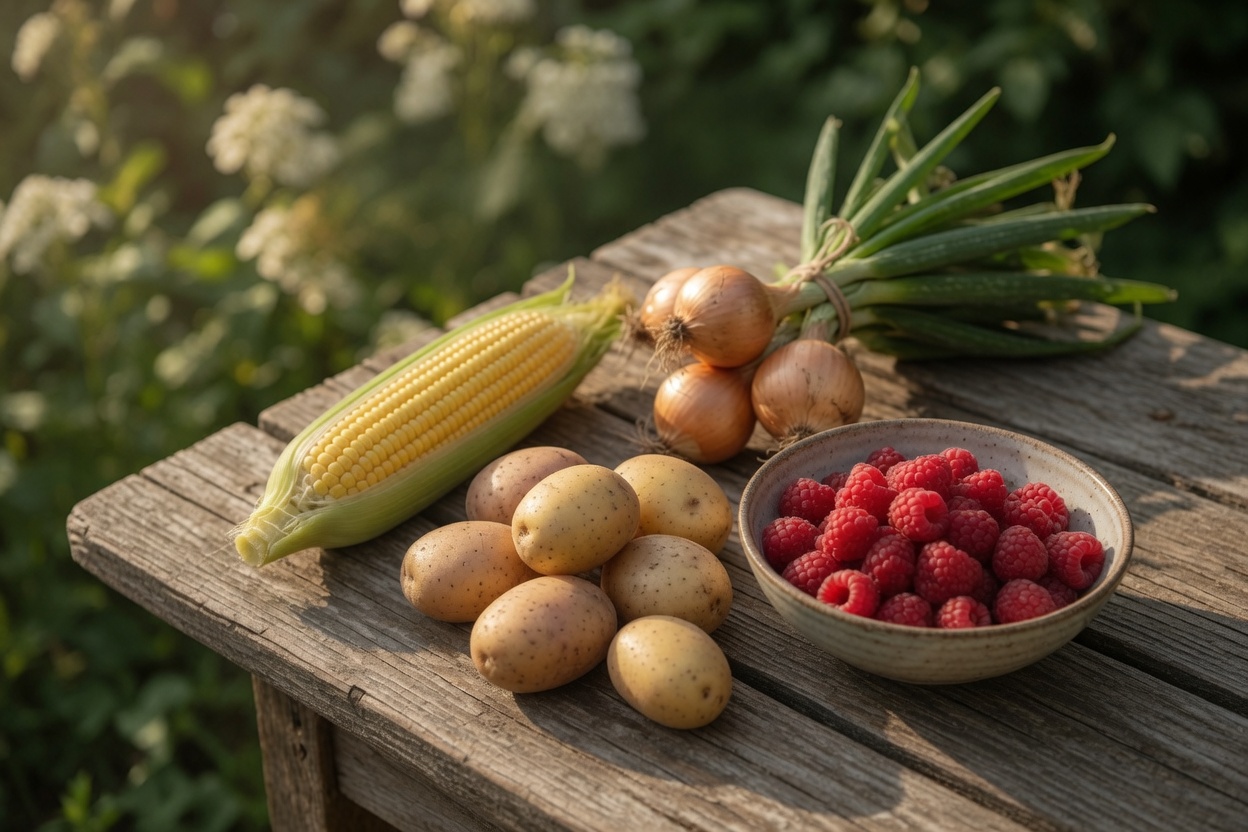
August is the month every gardener waits for. The weeks of watering, weeding, and watching finally give way to abundance. Baskets fill faster than you can eat, and the garden offers its most generous gifts. This is the peak of the harvest season, a time when the vegetable patch is at its most rewarding. And the question what to harvest in August goes out of the way. More than thirty different crops are ready to be picked, from juicy tomatoes to crisp beans and everything in between.
The key to making the most of this abundance is simple: pick regularly. Regular harvesting encourages plants to keep producing, prevents waste, and ensures you enjoy every crop at its best. The more you pick, the more the plants give. This is the rhythm of August.
If you are new to growing your own food, you might also enjoy our guide on how to start a cottage garden from scratch HERE.

Tomatoes – the jewel of the summer garden
Tomatoes reach their peak in August. The fruits ripen quickly in the warm weather, and checking the plants daily becomes a quiet, satisfying ritual. Pick tomatoes as soon as they have coloured up. Leaving them on the vine for too long can cause them to split, especially after rain. Regular picking also encourages the plant to produce more fruit.
As the season progresses, consider removing some of the lower leaves. This allows the plant to put all its energy into ripening the fruit rather than supporting excess foliage. It also improves air circulation, which can help prevent blight.
Storing your tomatoes:
The best way to store tomatoes depends on how ripe they are. Whole tomatoes keep their flavour best at room temperature, stored in a single layer in an open container away from direct sunlight. Fully ripe tomatoes can be kept in the fridge for a few days, but this does affect their flavour, so it is best to use them within a week. For a longer-term solution, freezing is simple. Wash the tomatoes, remove the stems, and freeze them whole on a baking sheet before transferring to a bag. The skins will crack, which makes them easy to peel when you are ready to use them for sauces and soups.
Courgettes – the gift that keeps on giving
Courgettes start cropping in July, but in August they become unstoppable. A single plant can produce more than you can eat, which is both a blessing and a gentle challenge. The trick is to pick them small. Courgettes are at their best when they are around ten centimetres long. Leave them for another day, and they can transform into marrows overnight.
Harvest courgettes by cutting them from the plant with a knife or snapping them off at the stem. Leaving about one to two centimetres of stem attached helps them last longer in storage. The plants have prickly leaves and stems, so wearing gloves can make the process more comfortable.
Storing your courgettes:
Courgettes are best used fresh, but they can be stored in the fridge for a few days. For longer-term storage, grating and freezing is the simplest method. Grated courgette can be added straight to soups, stews, and fritters without defrosting. Courgettes can also be pickled in a quick brine, which keeps them crisp and tangy for weeks.
Beans – pick often, pick young
Beans of all kinds – runner beans, French beans, and broad beans – are at their best in August. The secret to a good crop is picking them often. Beans taste their best when they are young and tender. Older beans become tough and stringy. Regular picking also encourages the plants to produce more pods.
Harvest runner and French beans when the pods are slender, smooth, and crisp. Mature snap beans should snap easily in half. For shelling beans, wait until the pods start to bulge but pick them before they turn yellow.
Storing your beans:
Green beans are best used within a few days of harvesting. Store them in the fridge in a plastic bag for three to five days. For longer storage, freezing is the best option. Blanch the beans in boiling water for a couple of minutes, then cool them quickly in cold water before freezing. This preserves their colour, texture, and flavour for months.

Other August harvests
August offers far more than tomatoes, courgettes, and beans. The vegetable patch is full of abundance.
Sweetcorn is ready when the tassels at the top of the cob turn brown and the kernels release a milky juice when pressed. Pick and eat it as soon as possible – the sugars turn to starch quickly after harvesting.
Potatoes that were planted in spring are now ready to lift. Wait for the foliage to die back, then carefully dig them up. Store them in a cool, dark, dry place.
Onions and garlic should be lifted once the tops start to wilt and turn yellow. Leave them to dry in a sunny spot for a few days before storing.
Salad leaves can still be picked, though they may start to bolt in the heat. Keep them well-watered and pick regularly to extend the season.
Root vegetables such as beetroot, carrots, and radishes are also ready. Carrots and beetroot can be left in the ground until you need them, but radishes are best picked young.
Soft fruits are ripening fast. Raspberries, strawberries, and gooseberries all need picking regularly. Summer-fruiting raspberries will keep producing if you pick them every day.
A quiet invitation
August is a month of abundance, but it is also a month of presence. When you have a question what to harvest in August, the garden gives more than we can eat, and the days give more light than we can fill. There is no need to rush. The tomatoes will ripen when they are ready. The courgettes will keep coming. And the slow, generous days of August will unfold at their own pace.
This week, I invite you to step into your garden with a basket and a quiet mind. Pick what is ready. Notice what is growing. And let the abundance of the season remind you that the best things in life are the ones you grow yourself.
Save this post for your next August harvest. 📌
👇 What are you most looking forward in what to harvest in August? Share in the comments below or tag me on Instagram @sophiasquietcottage.


