
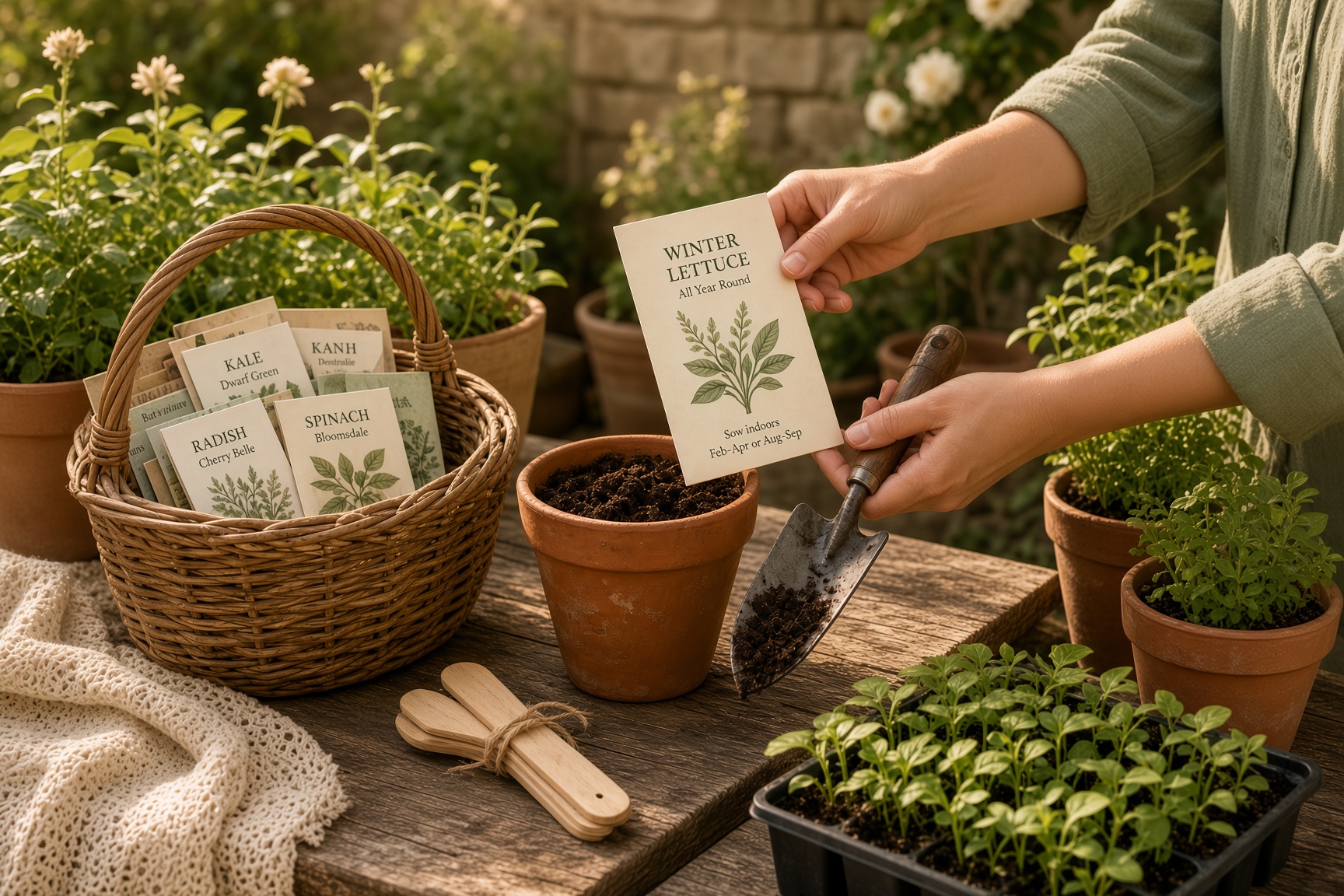
The garden in August is generous. Tomatoes are ripening, courgettes are still coming, and beans hang heavy on their vines. It is easy to assume that the planting season is over, that the only work left is harvesting and clearing. But August is not the end of the gardening year. It is a beginning.
While many gardeners wind down after July, smart planting in late summer can keep your vegetable patch productive right through to next spring. The soil is still warm from the summer sun, making it ideal for seed germination. The days are still long enough for young plants to establish. And the cooler weather that follows will be perfect for the hardy crops that thrive in autumn and winter.
Sowing now is about extending the season. It is about filling the gap between the last summer harvest and the first spring growth. It is about walking into the garden in November and picking fresh leaves for a salad, or lifting sweet roots for a winter stew. This is what it means to be a year-round gardener.
If you are new to gardening, you might also enjoy our guide on how to start cottage garden from scratch HERE. And no, August is not too late to start your garden.
Why August sowing works
August is a transitional month. The heat of high summer is beginning to ease, but the soil remains warm. This combination creates ideal conditions for germination, as seeds sprout quickly in the warm earth. At the same time, the cooling air means that young plants are less likely to bolt or become stressed.
The days are still long enough to give seedlings a good start, but the shorter nights signal to many plants that it is time to grow. Root vegetables, leafy greens, and brassicas all respond to this change in light by putting their energy into the parts we want to eat.
August sowing also makes the most of your growing space. Once you have cleared a bed of early potatoes or garlic, you can fill it with a second crop. This succession planting keeps your garden productive and your soil covered, which helps suppress weeds and prevent erosion.
Leafy greens for autumn and winter
Leafy greens are the backbone of the autumn and winter garden. They are quick to grow, packed with nutrients, and can be harvested over many weeks.
Spinach
Spinach is one of the best crops for August sowing. Sowing spinach in late August is almost a shortcut to success. It will yield a crop of young leaves by October, then go dormant over winter before returning with fresh growth in early spring. The great advantage is that spinach is straightforward to grow. Simply sow it directly into well-prepared, fertile soil. Watch for bolting by keeping it watered during any warmer spells. For best results, once temperatures begin to fall, cover your plants with a low cloche.
Hardy varieties like Giant Winter and Medania can be picked as baby leaves or left to grow into larger, heartier foliage. Spinach thrives in cooler temperatures and is less likely to bolt in late summer.
Rocket
Rocket is one of the most versatile crops for August sowing. Wild rocket sown in early August will produce leaves before winter arrives, then remain dormant until approximately March, when it will begin growing independently. The alternative is salad rocket, a variety that has greater frost resistance if you delay sowing until late August. It will probably yield more leaves throughout winter, though it becomes more susceptible to bolting once April arrives.
Rocket grows fast and does not need much space, making it ideal for small gardens or pots. Sow it directly into well-prepared soil, and you will have peppery leaves for salads and sandwiches well into the colder months.
Lettuce
A summer favorite, lettuce is also recommended for planting in August, setting you up nicely for an early winter harvest. Choose hardy winter varieties like Winter Gem, Arctic King, or lamb’s lettuce (corn salad) that tolerate the cold well. A cloche becomes particularly handy from late September onwards, once the weather begins to cool. If you want to extend your harvest even further, overwinter lettuce beneath cloches or in a greenhouse, and you can expect to pick leaves from April through to June the following year.
Chard
Chard is both colorful and cold-tolerant. August is your last chance to sow this crop, so it continues producing tender, nutritious leaves in the coming months. Rainbow Chard and Lucullus are both excellent choices. Sow now and you will have bright stems and glossy leaves to add color to your winter dishes.
Kale
Kale is a winter staple. It is easy to grow and extremely hardy. Sow now and enjoy pickings from autumn through to early spring. Kale is one of the most cold-tolerant vegetables you can grow. It can actually taste even better after a frost, as the cold triggers the plant to produce natural sugars that sweeten the flavor. Sow it directly in the ground or in modules, and protect from pigeons once the plants are established.

Root vegetables for autumn harvests
Root vegetables are the perfect choice for autumn and winter. They store well, grow slowly, and reward patience with sweet, earthy flavours.
Turnips
Turnips grow quickly and are very versatile, as both the sweet roots and the peppery green tops are edible, providing two crops in one. Sow in August for a late autumn crop. Pick young for a sweet flavour or let them grow larger for winter storage. They work beautifully in everything from roasted vegetable trays to warming winter stews.
Radishes
Radishes are fast-growing and low-maintenance, ideal for late summer sowing. Expect harvests in just four to six weeks. French Breakfast and Autumn King are great choices. Sow them in succession every few weeks for a steady supply of crisp, peppery roots.
Carrots
August is your last chance to sow carrots for an autumn harvest. Late sowings of quick-maturing carrots like Amsterdam Forcing or Early Nantes can give you harvests before the first frosts. Early, short-root varieties are best for late sowing.
Beetroot
You can still sow beetroot in August for small autumn roots or baby leaves for salad. Try bolt-resistant varieties like Boltardy. The young leaves are also delicious in salads.
Onions and alliums for overwintering
Onions and spring onions are some of the most valuable crops for August sowing. They take up little space, grow through the winter, and provide early harvests in spring.
Spring onions
Spring onions mature quickly and take up very little space, so it is easy to grow them in either beds or containers. Choose winter-hardy varieties like White Lisbon Winter Hardy. Sow in August and you will have fresh, mild onions for salads and winter comfort meals from autumn through to spring. You can sow them every two weeks between March and September for a continual harvest.
Overwintering onions
For those wanting to try overwintering bulb onions, late summer is a good time to sow varieties bred for that purpose. These seeds need a little head start while the days are still long and warm, allowing plants to bulk up before entering dormancy. Varieties like Senshyu Yellow are popular overwintering Japanese onions, sown in August and harvested the following June. Sow seed in August and, once they are large enough around mid-October, transplant into the garden. You can harvest green onions until April, then they will begin to bulb and be ready to harvest as dried down bulbs by mid to late June.
Brassicas for spring harvests
August is the time to sow brassicas that will overwinter and provide early spring harvests.
Spring cabbage
Spring cabbage is one of the most valuable August sowings. Sow in a seed bed or modules in early August. Transplant to final positions in September or October, spacing 30cm apart. Plants overwinter as small rosettes and produce tight, pointed heads from March to May, when little else is available. Varieties like Durham Early, April, and Flower of Spring are bred for overwintering. They tolerate hard frost down to -12C. Net against pigeons from the day you plant them out, as pigeons strip brassica leaves through winter when other food is scarce.
Pak choi
Pak choi actually performs better from August sowings than spring ones. The shorter days reduce the bolting that plagues this crop in the long days of May and June. Sow directly outdoors, 1cm deep, and thin to 20cm apart. Harvest baby leaves in four to five weeks or full heads in eight weeks. Grow under fleece from October to extend the season into November. A single August sowing provides stir-fry greens through the whole of autumn.
Other brassicas
Kale, cabbages, and chicory can also be sown in August. Kale is cold-hardy and vigorous, and can be direct seeded from mid to late August and harvested well into winter. Cabbages are hardy and reliable, making them a winter garden staple. Chicory adds a slightly bitter, nutty note to winter dishes and continues to grow slowly through the season.

Tips for successful August sowing
Sowing in August requires slightly different techniques than spring sowing. The soil is warm, which is good for germination, but it can also dry out quickly.
Prepare the soil well. Remove weeds and rake the soil finely. Add compost if needed to improve moisture retention. Good soil preparation gives your seedlings the best possible start.
Water consistently. The soil may dry out quickly in late summer, so keep it moist until seedlings are established. Watering early in the morning is best, as it reduces evaporation and gives the plants time to absorb moisture before the heat of the day.
Provide shade for delicate seedlings. If you are sowing in a particularly hot spell, consider using a light shade cloth or sowing in a spot that gets afternoon shade. This prevents the young seedlings from drying out or bolting.
Protect from pests. Cabbage white butterflies are still active in August, so net your brassicas. Slugs and snails are also a threat to young seedlings, so protect them with barriers or organic slug pellets.
Use cloches and fleece. As the weather cools in autumn, cloches and fleece become invaluable. They protect plants from frost, extend the growing season, and keep pests at bay. A simple cloche can add several weeks to your harvest.
Sow in succession. For a continuous supply of salad leaves, sow small batches every two weeks. This way, you always have fresh leaves ready to pick.
A quiet invitation
August sowing is an act of faith. It is trusting that the warm soil and the lengthening shadows will do their work. It is believing that the garden still has gifts to give, even as the season begins to turn.
This week, I invite you to sow something for autumn or winter. A row of spinach, a patch of rocket, a few spring cabbage seeds. Water them in, cover them if needed, and let the garden do the rest. You will be surprised how much a small act of planting now can give back in the months ahead.
Save this post for your August sowing plans. 📌
👇 What are you planning to sow for autumn and winter? Share in the comments below or tag me on Instagram @sophiasquietcottage.


Leave a Reply